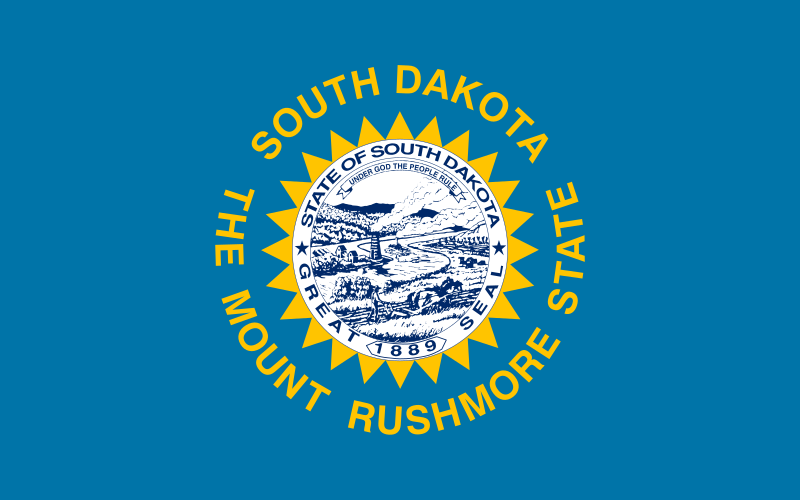
A South Dakota filial responsibility law is a statute that can require an adult child to support an indigent parent — and in the worst case, to pay the parent’s nursing home bill. This South Dakota filial responsibility law guide gives the straight answer for South Dakota in 2026: whether such a law exists, whether it has ever been enforced, the ways adult children really do end up owing, and what to do when a facility’s letter arrives.
The statute citation and its status come from the current South Dakota code; the enforcement history from reported cases. Nothing here is legal advice.
In This South Dakota Filial Responsibility Law Guide:
South Dakota Filial Responsibility Law: The Short Answer
Yes, South Dakota has a South Dakota filial responsibility law on the books — S.D. Codified Laws 25-7-27, 25-7-28. It can, in principle, make an adult child with the means to pay support an indigent parent. child must be formally notified first.
What the South Dakota Filial Responsibility Law Says
The statute is S.D. Codified Laws 25-7-27, 25-7-28. Like most filial support laws it applies only when the parent cannot support themselves, only to a child with sufficient means after providing for their own household, and only for necessities — food, shelter, clothing, medical care.
NONE. A search of the South Dakota Legislature’s bill records for the 2024, 2025 and 2026 regular sessions turned up no bill to repeal, amend or replace the state’s adult-child support statute, and no interim study of it. The law sits in the support obligations chapter of the codified laws essentially as the Supreme Court read it in 1994.
If you want to confirm nothing new has been filed, the Legislature posts every bill and its status at sdlegislature.gov.
Is the South Dakota Filial Responsibility Law Actually Enforced?
South Dakota does have a filial support statute, and unlike most states it has actually been used. In Americana Healthcare Center v. Randall, decided by the South Dakota Supreme Court in 1994, a nursing home sued the only son of an elderly resident whose bill went unpaid, and the court held that an adult child who has the financial ability can be made to support a parent who cannot pay.
The court also rejected the son’s argument that the law was unconstitutional. Reported cases since then are rare.
How Adult Children Really End Up Owing
Most adult children who end up owing a South Dakota nursing home never get sued under the filial statute at all. They signed the admission paperwork on a “responsible party” or guarantor line and took on the debt by contract.
Or they served as agent under a power of attorney or as representative payee and spent the parent’s money on themselves or on other family, which lets the facility and the state come after them personally. Gifts and transfers of a parent’s assets can also trigger a Medicaid penalty that leaves the bill unpaid and the family pressured to cover it.
❤️ Get Free Medicare Guides
Free · No spam · Unsubscribe anytime
In every state the estate is the first source of repayment after a death, not the children. The rules for that are in our guide to South Dakota Medicaid estate recovery.
What a South Dakota Nursing Home May Put in the Admission Agreement
Any South Dakota nursing home that takes Medicare or Medicaid is bound by the federal Nursing Home Reform Act, which forbids the facility from requiring a third party to personally guarantee payment as a condition of admission, faster admission, or continued stay. A relative cannot be told to sign as guarantor to get a parent in the door.
The home may ask someone who already controls the parent’s money to agree to pay the bill from that money, which is a different and much narrower promise. South Dakota’s licensing rules also give residents a written admission agreement and a resident bill of rights.
How to Protect Yourself Under the South Dakota Filial Responsibility Law
- Never sign in your own name. On any facility form, write your name followed by “as agent for [parent]” or “as POA”.
- Apply for Medicaid early. A parent who qualifies for South Dakota nursing home Medicaid has the bill paid; the filial question only arises when the parent is uncovered.
- Keep the parent’s money separate and keep receipts for every payment made as agent.
- Answer demand letters in writing, asking for the statute and the signed document the claim rests on.
Free help in South Dakota: An adult child facing this can call East River Legal Services in Sioux Falls at 605-336-9230 or toll free 800-952-3015, which serves eastern South Dakota and gives preference to people sixty and over. West river and tribal communities are served by Dakota Plains Legal Services at 605-856-4444. The State Bar of South Dakota’s Access to Justice line is 855-287-3510, and the statewide intake portal is ujslawhelp.sd.gov. For a complaint about the facility itself, the state Long-Term Care Ombudsman is at 605-773-3656..
Where These Laws Came From
Filial support statutes descend from the English Poor Laws and were written when families, not governments, were the safety net. Medicaid, created in 1965, took over that role for nursing home care, and most of the statutes went quiet. A few states repealed theirs; most simply stopped using them. The laws returned to public attention when nursing homes, facing unpaid bills after a Medicaid denial, rediscovered the statutes as a collection tool.
What “Indigent” and “Means” Mean in a South Dakota Filial Responsibility Law
Two conditions appear in nearly every statute. The parent must be unable to support themselves — indigent — which in practice means the parent’s own income and assets, and any Medicaid coverage, come first. And the child must have the means to pay after supporting their own household. A court weighing a South Dakota filial responsibility law claim looks at the child’s income, debts, dependents and retirement needs before ordering anything.
A child with a mortgage, children in school and an ordinary salary is rarely a realistic target.
A South Dakota Filial Responsibility Law Is Not Medicaid Estate Recovery
Families confuse the two. Estate recovery is the state recouping what Medicaid paid, from the deceased parent’s estate, after death; it reaches the parent’s property, not the children’s wallets. A filial claim is a creditor — usually a facility — asking a living child to pay during the parent’s life. Both are worth understanding; only the second one is about the child’s own money.
Documents to Gather Before Responding
- The admission agreement, with the signature page, to see in what capacity you signed.
- The parent’s Medicaid application or denial, and the reason for any denial.
- Any power of attorney, and the records of money moved under it.
- The facility’s itemized bill and the dates it claims went unpaid.
- Your own household budget, if a means test could ever be applied under the South Dakota filial responsibility law.
Where to Get Help Free
Two free doors exist in every state: the South Dakota SHIP counselor for the Medicare side and the state’s Aging and Disability Resource Center for the Medicaid side. Neither sells anything. For a South Dakota filial responsibility law question involving a house, a spouse at home or a recent gift, a local elder law attorney or legal aid office is the next call.
Official Sources
- S.D. Codified Laws 25-7-27, 25-7-28: https://sdlegislature.gov/Statutes/25-7-27
- Medicaid.gov spousal impoverishment standards: medicaid.gov
- Medicare.gov Medicare Savings Programs: medicare.gov
This South Dakota filial responsibility law guide was checked against the state Medicaid agency, CMS and the statute cited above in September 2026. Figures reset on their own calendars (most on January 1); if a number here disagrees with a notice you received, the notice wins — and please tell us. This page is general information, not legal, financial or medical advice.